
Choosing between rectified and standard tile can shape how an entire room looks once the grout dries. This guide breaks down what rectified tile actually is, where it shines, and how to decide if it’s the right fit for your next project.
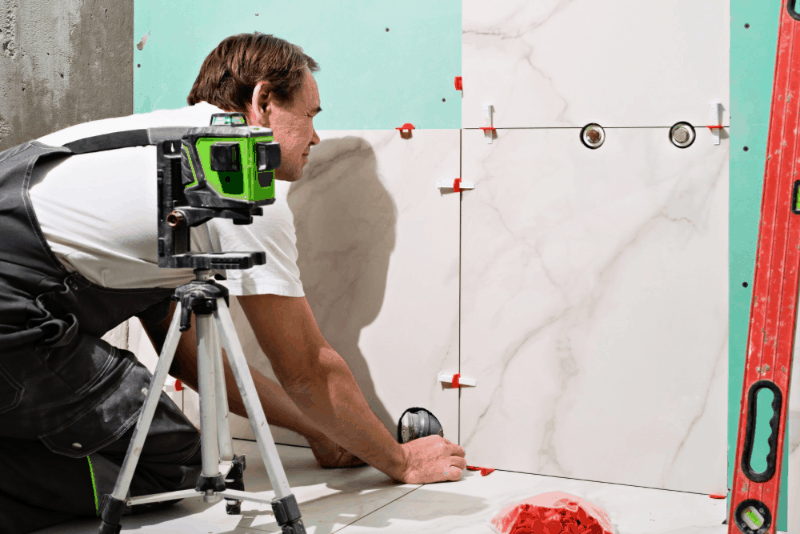
Rectified tile has become one of the most requested finishes in modern renovations, and it’s easy to see why once you notice the difference in person. Unlike standard tile, rectified pieces are cut with precision after firing, giving each edge a straight, uniform line that reads as sleek and intentional once installed. In the sections ahead, we’ll look at how rectified tile compares to non-rectified options, where the advantages actually show up, and which rooms or projects tend to benefit most, useful context whether you’re planning a full tile flooring installation or simply comparing materials for a future project.
What Is Rectified Tile?
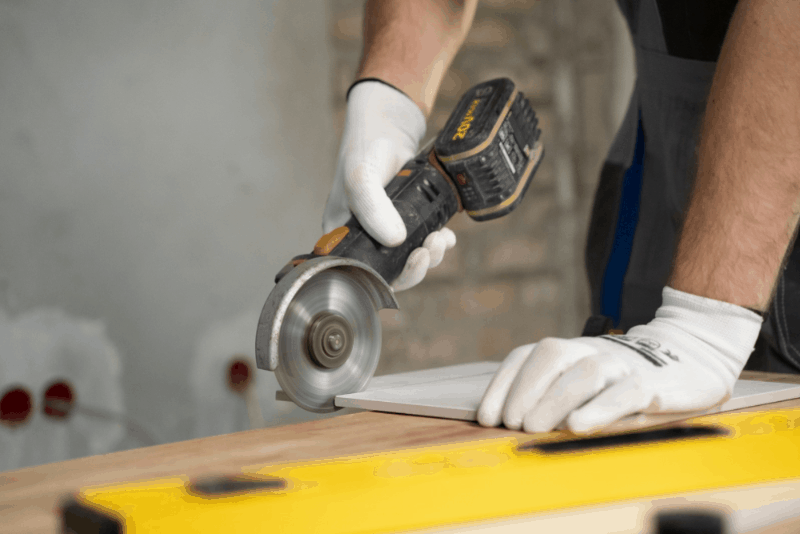
At its core, rectified tile refers to tile that’s been mechanically trimmed after the firing process, rather than left with the natural edge that comes straight out of the kiln.
During manufacturing, tile can shrink or shift slightly as it bakes, which means two pieces from the same batch might come out just a touch different in size. Rectification solves that by running each tile through a precision cutting step once it has cooled, squaring off the edges and trimming every piece to matching dimensions.
The result is a tile with crisp, straight edges and consistent sizing from piece to piece. Standard, non-rectified tile keeps its slightly rounded, factory-fresh edge, which works fine for plenty of looks but doesn’t offer quite the same tight, seamless fit. That comparison is worth exploring further, and we’ll get into it a bit later.
Rectified Porcelain Tile: What Makes It Different?
Rectified porcelain tile has become one of the go-to materials for modern interiors, largely because porcelain already holds up well on its own, and rectification sharpens that further. This section focuses on what the material itself is made of and how it’s finished, not where it works best.
How Rectified Porcelain Is Made
Porcelain tile starts as a dense clay mixture, pressed and fired at high temperatures until it becomes hard and low-porosity. Once a batch cools, each piece heads through a rectification step, where a mechanical cutter trims the edges to a precise, uniform size.
Compared to traditional cutting, which happens before firing and can leave slight variation once the clay shrinks, rectification happens afterward, so the dimensional accuracy holds regardless of how the kiln affected the piece. The finish along the cut edge also comes out cleaner, without the soft, rounded look that traditional edges have.
Why Rectified Porcelain Tile Allows Narrow Grout Lines
Because rectified edges line up so precisely, installers can space tiles much closer together than they could with a rounded edge, which needs a wider joint to look intentional rather than uneven.
Thinner grout lines create a more continuous surface, where the eye reads the floor or wall as one unbroken plane rather than a grid of individual tiles. In smaller rooms especially, that continuity tends to make the space feel more open, and the overall finish comes across as more polished than a standard grid of wider joints.
Rectified Porcelain Floor Tile: Is It a Good Choice?
Rectified porcelain floor tile has become especially popular underfoot, thanks to a combination of durability and a finish that stays consistent across an entire room.
Benefits of Rectified Porcelain Floor Tile
- High wear resistance – holds up well under daily foot traffic and heavy furniture.
- Low maintenance – resists staining and doesn’t require sealing like natural stone.
- Strong visual appeal – the tight, even joints give floors a clean, cohesive look.
- Well suited for large spaces – fewer visible grout lines help open areas feel unified rather than segmented.
These aren’t just short-term perks. Over years of use, a floor that resists wear and keeps its appearance without constant upkeep tends to save both money and hassle compared to materials that need more frequent attention.
Best Rooms for Rectified Porcelain Floor Tile
Some rooms simply get more out of a rectified finish than others, depending on traffic, moisture, and the overall look homeowners are going for.
- Kitchen – handles spills and heavy foot traffic while keeping a clean, modern appearance.
- Living room – the seamless look pairs well with open floor plans.
- Bathroom – moisture resistance and a polished finish make it a practical fit.
- Entryway – durability matters here more than almost anywhere else in the home.
- Commercial areas – consistent sizing makes large-scale installations look sharp and uniform.
Rectified Floor Tiles vs Non-Rectified Floor Tiles
Both rectified floor tiles and non-rectified options have their place, and the right pick usually comes down to the look and budget of the specific project.
| Feature | Rectified Tile | Non-Rectified Tile |
| Edges | Straight, precisely cut after firing | Slightly rounded, natural edge |
| Grout lines | Thinner, tighter joints | Wider joints needed for a clean look |
| Visual look | Seamless, continuous | Traditional, more defined lines |
| Installation | Requires more precision | More forgiving for smaller projects |
Differences in Edges and Finish
The most noticeable difference sits right at the edge of each tile. Rectified pieces line up almost flush against one another, while non-rectified tile keeps a soft curve that creates a slightly more textured, traditional look once installed. Visually, that translates into a sleeker, more contemporary feel for rectified tile, versus a warmer, more classic pattern for the non-rectified option.
Differences in Installation and Grout Lines
Grout width is where the practical differences show up most. Rectified tile typically calls for joints as narrow as 1/16 inch, while non-rectified tile often needs 1/8 inch or more just to look intentional rather than uneven.
That narrower margin means installers have far less room for error. Every tile has to sit level and square with its neighbors, which naturally takes more time and a steadier hand than laying tile with a wider, more forgiving joint.
Rectified Ceramic Tiles: Pros and Cons
Rectified ceramic tiles bring that same clean-edged, modern look to a more budget-friendly material, though ceramic and porcelain don’t perform identically once installed.
When to Choose Rectified Ceramic Tiles
Rectified ceramic tends to make the most sense on tighter budgets, since it delivers a similar sharp-edged aesthetic at a lower price point than porcelain. It’s a solid fit for residential projects with moderate foot traffic, and it works particularly well as a wall covering, where durability demands are lower than on a floor.
Rectified Ceramic Tiles vs Rectified Porcelain Tiles
Porcelain generally wins out on durability and water absorption, since it’s fired denser and holds up better in wet or high-traffic areas. Ceramic tends to cost less upfront but isn’t always the strongest match for busy floors or exterior use. For a closer look at how the two materials stack up, ceramic vs porcelain tiles covers the comparison in more detail. As a general rule, porcelain suits floors and wet areas, while ceramic holds its own on walls and lower-traffic spaces.
Benefits of Rectified Tile for Modern Homes
Rectified tile keeps showing up in contemporary design for good reason. Beyond the technical details already covered, it brings a handful of style and lifestyle advantages that fit naturally with today’s homes.
- Minimalist design – clean lines match the pared-back look many homeowners are after.
- Greater visual continuity – tighter joints keep the eye moving smoothly across a room.
- A sense of spaciousness – fewer visible grout lines make rooms feel larger than they are.
- Easier cleaning – narrower joints mean less grout exposed to collect dirt and grime.
- An elevated finish – the overall look tends to read as more considered and polished.
Together, these details do more than just look good. They shape how a room feels day to day, from how easy it is to keep clean to how open and cohesive the space actually appears.
Our Professional Tile Installation Service: Precision You Can Trust
Because rectified tile leaves so little margin for error, the quality of the installation matters just as much as the material itself. A joint that’s slightly off can throw the entire pattern out of alignment across a whole room.
That’s where working with a specialized team makes a real difference. Our tile installation services are handled by installers who work with rectified materials regularly, on both residential and commercial projects, and who understand exactly how much precision these tighter joints demand.
Uniform joints and a clean, level finish rarely happen by accident with rectified tile. Every piece has to be set square with the next, which takes a trained eye and steady technique built from repetition, not a first attempt. For homeowners in Roseville, Sacramento, El Dorado Hills, Folsom, Granite Bay, and Rocklin planning a rectified tile project, getting a second opinion on the layout and material before installation day tends to save both time and frustration down the line.
FAQs About Rectified Tile

Here are some of the most common questions homeowners ask about rectified tile before starting a project.
What does rectified tile mean?
Rectified tile is tile that’s mechanically trimmed after firing, giving every piece the same precise dimensions and a straight, sharp edge. This differs from standard tile, which keeps its natural, slightly rounded edge straight out of the kiln without any additional cutting.
Is rectified porcelain tile better?
It depends on the project. Rectified porcelain tile offers a more seamless, modern finish with narrower grout lines, which suits contemporary spaces well, but standard porcelain can still be the more practical pick for smaller budgets or more forgiving installations.
What is the difference between rectified and non-rectified tile?
The main difference comes down to the edge. Rectified tile is precisely cut for uniform sizing and tighter joints, while non-rectified tile keeps a softer, slightly rounded edge that needs wider grout lines to look intentional rather than uneven.
Are rectified floor tiles more expensive?
Generally, yes. The extra manufacturing step needed to trim and size each piece adds to production costs, so rectified floor tiles typically cost more than comparable non-rectified options, though the precise finish often justifies the difference for many homeowners.
Do rectified tiles need grout?
Yes, rectified tile still requires grout between pieces, just in noticeably narrower joints than standard tile. The tight spacing is part of what gives rectified installations their clean, continuous look, rather than eliminating grout altogether.
Can rectified porcelain floor tile be used in bathrooms?
Yes, rectified porcelain floor tile is a strong match for bathrooms thanks to its low water absorption and durable surface. As long as it’s installed correctly, with attention to slope and sealing where needed, it holds up well in wet, high-moisture environments.
Is rectified ceramic tile good for walls?
Rectified ceramic tile works well on walls, where the durability demands are lower than on floors. It’s a practical choice for kitchen backsplashes, bathroom walls, and other vertical surfaces that benefit from a clean, modern look without the higher cost of porcelain.
Is rectified tile harder to install?
Yes, rectified tile demands more precision than standard tile, since the narrower grout lines leave little room for uneven spacing or misaligned edges. Because of that, hiring installers experienced with rectified materials is usually worth the investment for a clean, lasting result.