
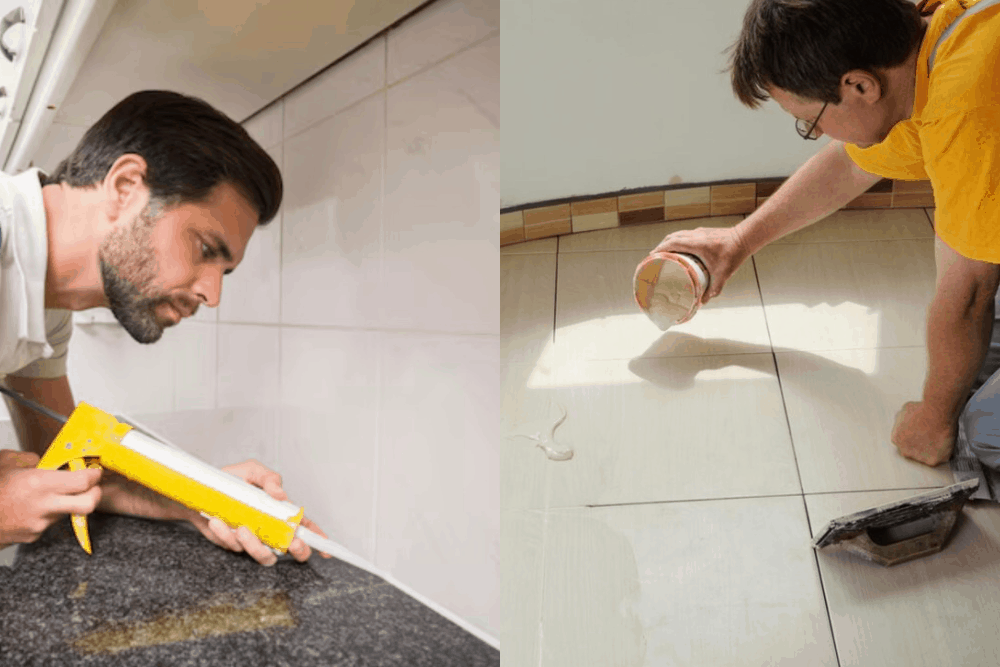
When it comes to finishing a tile installation, grout vs caulk is a question that trips up even experienced renovators. Both materials fill gaps — but they behave differently, serve different purposes, and are not interchangeable. Using one where the other belongs leads to cracks, moisture infiltration, and premature failure. Understanding the distinction upfront saves time, money, and frustration. If you’re planning a tile project and want it done right the first time, reviewing professional tile installation services is a smart starting point.
What is Grout and When Should You Use It?
Grout is a cement-based or epoxy filler used to fill the joints between tiles once they’ve been set in place. Its primary function is structural — it stabilizes the tile field, prevents movement between individual tiles, and creates a finished, cohesive surface. Without grout, tiles remain vulnerable to shifting, chipping at the edges, and moisture penetration through open joints.
Key Uses
Grout is the right material when filling joints between tiles on a fixed, stable surface. It works across a broad range of applications:
- Floor tile joints in kitchens, hallways, and living areas
- Wall tile installations in bathrooms and kitchens
- Shower floors and walls — using the appropriate grout type for wet environments
In dry areas, standard sanded or unsanded grout is typically sufficient. In wet or high-humidity environments like showers, an epoxy or polymer-modified grout offers better resistance to moisture and staining over time.
Benefits of Grout
When properly installed, grout contributes to the structural integrity of the entire tile surface. It locks tiles in place, distributes load evenly, and provides a uniform aesthetic finish across the field. Durability improves significantly when grout is sealed after installation — especially in areas exposed to water, foot traffic, or cleaning chemicals.
What is Caulk and When Should You Use It?
Caulk is a flexible sealant — typically silicone or latex-based — designed for joints that experience movement. Unlike grout, it doesn’t harden into a rigid structure. Instead, it remains pliable, absorbing the natural expansion and contraction that occurs where two surfaces meet at different angles or planes.
Caulk belongs wherever there’s a transition: where tile meets a bathtub, where a wall meets a floor, or at inside corners. These are movement joints, and they need a material that can flex without cracking.
Benefits of Caulk
- Flexibility — adapts to minor structural movement without breaking
- Water resistance — silicone caulk in particular creates a watertight seal
- Adhesion across materials — bonds effectively between tile and non-tile surfaces like acrylic, fiberglass, or porcelain fixtures
These properties make caulk the only appropriate choice at structural transition points. Any rigidity in those locations leads to failure.
Key Differences Between Caulk and Grout
Understanding the difference between caulk and grout comes down to one core principle: rigidity vs. flexibility. Both fill gaps, but the type of gap determines which one belongs there. Here’s a quick breakdown:
| Grout | Caulk | |
| Use | Between tiles | At joints and transitions |
| Flexibility | Rigid | Flexible |
| Location | Field joints | Corners, edges, perimeters |
| Durability | Long-lasting when sealed | Requires periodic replacement |
Purpose and Function
Grout functions as a rigid filler that locks the tile field together. Caulk functions as a flexible seal that accommodates movement. Using grout in a movement joint causes it to crack under stress; using caulk in a field joint lacks the structural support tiles require.
Materials
Grout is typically cementitious — either sanded (for wider joints) or unsanded (for narrow joints) — or epoxy-based for demanding environments. Caulk is most commonly silicone for wet areas due to its superior water resistance, or latex-based for dry interior applications where paintability matters.
Durability and Maintenance
Grout, when sealed and maintained, can last for many years without significant deterioration. Caulk has a shorter lifespan — typically 5 to 10 years depending on exposure — and should be inspected periodically for cracking, discoloration, or separation. Knowing this difference helps set the right maintenance expectations from the start. For floors, proper tile flooring installation ensures both materials are applied in the correct locations from day one.
When to Use Caulk vs Grout Between Tub and Tile
The question of grout or caulk between tub and tile is one of the most searched — and most misunderstood — topics in bathroom renovation. The tub-to-tile joint is a critical zone: it experiences constant movement as the tub flexes under weight and temperature changes, and it’s exposed to water every day.
Why Grout Isn’t Ideal for Tub Edges
Grout has no flexibility. When applied to the joint between a bathtub and tile wall, it will eventually crack — usually within months — as the tub shifts. Those cracks become entry points for water, which travels behind the tile and into the wall structure, causing mold, rot, and damage that’s far more expensive to repair than the original installation.
Why Caulk Is the Better Option
Silicone caulk is designed precisely for this joint. It flexes with the tub, maintains a watertight seal, and doesn’t crack under repeated movement. A properly applied bead of caulk at the tub-tile junction protects the wall assembly far more effectively than grout ever could in that location.
Installation Tips
Preparation makes the difference between a seal that lasts and one that fails within a season:
- Clean the joint thoroughly and remove any old grout, soap residue, or moisture before applying
- Apply caulk in a single, continuous bead without stopping mid-joint
- Smooth immediately with a wet finger or caulk tool for full contact and a clean edge
Common Mistakes to Avoid When Using Caulk or Grout
Small errors in material selection or application have a direct impact on how long a tile installation holds up. These are the mistakes that cause the most problems.
Using Caulk in the Wrong Places
Caulk applied between field tiles — where grout belongs — lacks the compressive strength the joint requires. Over time, it compresses under foot traffic, discolors unevenly, and creates a visually inconsistent finish that’s difficult to correct without removing the surrounding tile.
Using Grout in Sealing Joints
Applying grout at inside corners, along tub edges, or at floor-wall transitions is a very common mistake. Because grout is rigid, it cracks at these points almost inevitably. Those cracks allow water to infiltrate, and moisture behind tile walls causes damage that often goes unnoticed until it’s become a significant structural problem.
Not Applying Enough Pressure
Whether applying grout with a float or caulk with a gun, consistent pressure ensures full contact with the substrate. Gaps and air pockets in either material reduce adhesion, lead to early failure, and require repairs sooner than they should.
How to Maintain Grout and Caulk for Long-Lasting Results
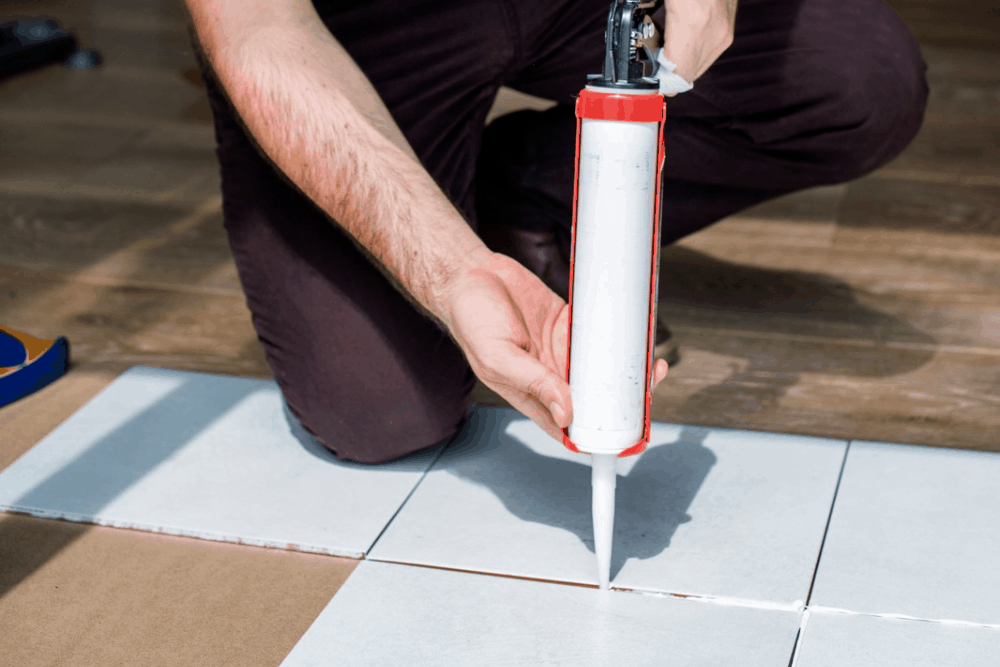
Maintenance is what separates a tile installation that looks good for years from one that deteriorates prematurely. Neither material is maintenance-free, but both are manageable with the right routine.
Sealing Grout
Unsealed grout absorbs moisture, stains, and cleaning product residue over time. Applying a quality shower grout sealant after installation — and reapplying periodically based on exposure — significantly extends the life of the grout and keeps it looking clean. In wet areas like showers, annual sealing is a reasonable baseline.
Caulk Maintenance
Caulk should be inspected every year, particularly in high-moisture areas. Signs of wear include cracking, peeling at the edges, discoloration, or visible gaps between the caulk and the adjoining surface. When these appear, the old caulk should be removed completely before a fresh application — applying new caulk over deteriorated material doesn’t restore the seal.
Regular Cleaning Tips
Consistent cleaning prevents buildup that accelerates deterioration in both materials:
- Clean tile surfaces regularly with a mild, pH-neutral cleaner
- Avoid acidic or abrasive products, which erode grout and degrade silicone caulk over time
- Dry shower walls after use when possible to reduce moisture exposure
Expert Solutions for Your Tile Installation Needs
Getting grout and caulk right requires more than knowing the theory — it takes the right technique, the right materials, and experience applying both under real conditions. That’s exactly where professional tile installation experts make a difference.
BayTile has been delivering professional tile installation and finishing services for over 15 years, serving homeowners and contractors across Sacramento, Roseville, Folsom, El Dorado Hills, Granite Bay, Rocklin, and surrounding communities. Founded by Walter Argueta, the team brings hands-on expertise to every project — including the details that matter most, like ensuring grout and caulk are applied in exactly the right places from the start.
Whether you’re renovating a bathroom, finishing a kitchen floor, or working on a larger project, a professional evaluation ensures the right materials are used in the right locations — and that the result holds up over time. Reach out to BayTile for a consultation and get your project started on solid ground.