
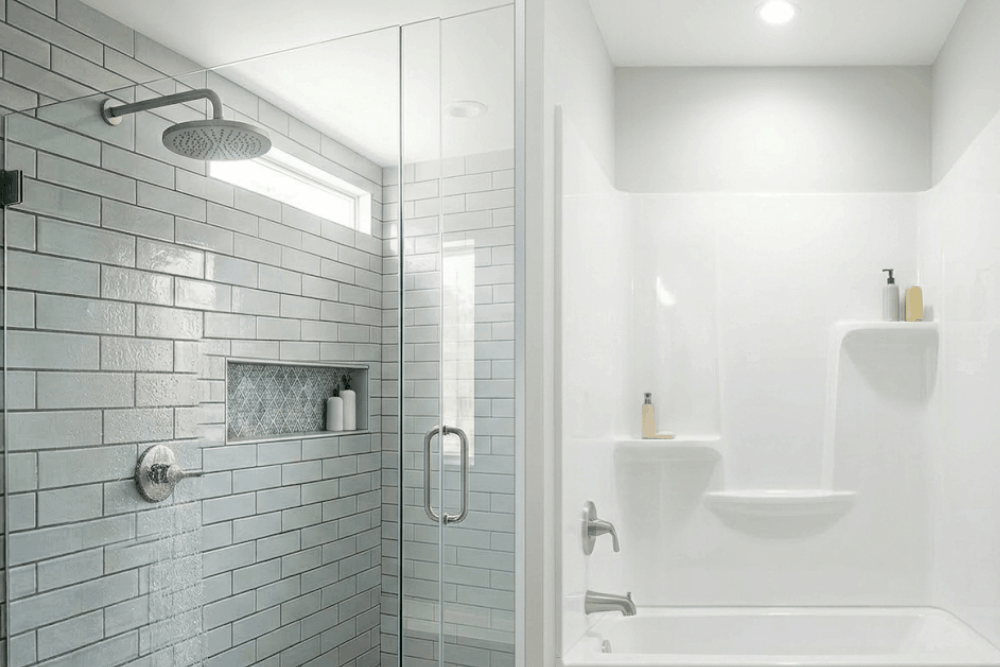
When planning a bathroom remodel, the shower tile vs fiberglass debate is one of the first — and most consequential — decisions you’ll face. Cost, durability, daily maintenance, and the overall look of your bathroom all hinge on this choice. This guide breaks it down clearly, drawing on real installer experience, so you can walk away with a confident, informed decision.
Shower Tile vs Fiberglass: Key Differences
Both options have legitimate advantages — it really depends on what you’re optimizing for. Here’s a side-by-side breakdown:
- Material: Tile uses ceramic, porcelain, or natural stone – Fiberglass is a molded composite.
- Installation: Tile requires skilled labor and more time – Fiberglass installs as a prefab unit.
- Customization: Tile offers unlimited design flexibility – Fiberglass comes in fixed shapes and finishes.
- Durability: Tile lasts decades when properly installed – Fiberglass is more prone to wear over time.
- Price: Tile costs more upfront – Fiberglass is the entry-level option.
Visually, the gap is immediate. Tile showers feel crafted and intentional — you can mix materials, play with patterns, or go for a seamless stone aesthetic. Fiberglass, while practical, has a standardized look that tends to show its age. From a daily-use standpoint, tile delivers a premium feel underfoot and against the walls, while fiberglass simply gets the job done.
Cost of Tile Shower vs Fiberglass: What to Expect
Price is often the tipping point in this decision. Understanding the cost of tile shower vs fiberglass before you commit prevents mid-project surprises.
Average Cost of a Fiberglass Shower
Fiberglass units typically land between $500 and $1,500 for materials alone, with full installed costs ranging from $1,000 to $3,500 depending on the space. The appeal is real: lower initial investment, faster turnaround, and minimal labor requirements.
Average Cost of a Tile Shower
Tile costs more — not arbitrarily, but because of what’s involved. Waterproofing, specialized labor, and premium materials like porcelain or natural stone all contribute. Total installed costs typically range from $2,500 to $8,000+, depending on the tile selected and the complexity of the layout.
Professional shower tile installation demands precision at every phase — from substrate prep to final grouting. Teams like Baytile, which serves homeowners in Roseville, Folsom, and Granite Bay, are often sought out specifically for custom tile projects where the margin for error is slim.
Fiberglass vs Tile Shower Cost Comparison
Numbers alone don’t tell the full story. When you factor in fiberglass vs tile shower cost over the long term, the equation shifts:
| Factor | Fiberglass | Tile |
| Initial cost | Lower | Higher |
| Long-term cost | Replacement likely sooner | Minimal with upkeep |
| Property value added | Modest | Meaningful ROI |
Tile tends to pay for itself — not just in durability, but in what it does for your home’s resale value. Fiberglass may save money now but often requires earlier replacement, which quietly erases that initial savings.
Durability: Is Tile or Fiberglass More Long-Lasting?
Durability is where the two materials diverge most sharply. A well-installed tile shower can last 20 to 30 years — sometimes longer — with the right upkeep. The operative phrase is “well-installed”: improper waterproofing or rushed grouting can cut that lifespan significantly.
Fiberglass holds up under light to moderate use, but daily wear adds up. Surface scratches, cracking near fixtures, and gradual fading are common complaints after several years of regular use.
Installation quality is the deciding factor for tile. Baytile’s professional installers have spent over 15 years building showers that last across Sacramento — precisely because they understand that durability starts with the first layer, not the last.
Maintenance and Cleaning Requirements
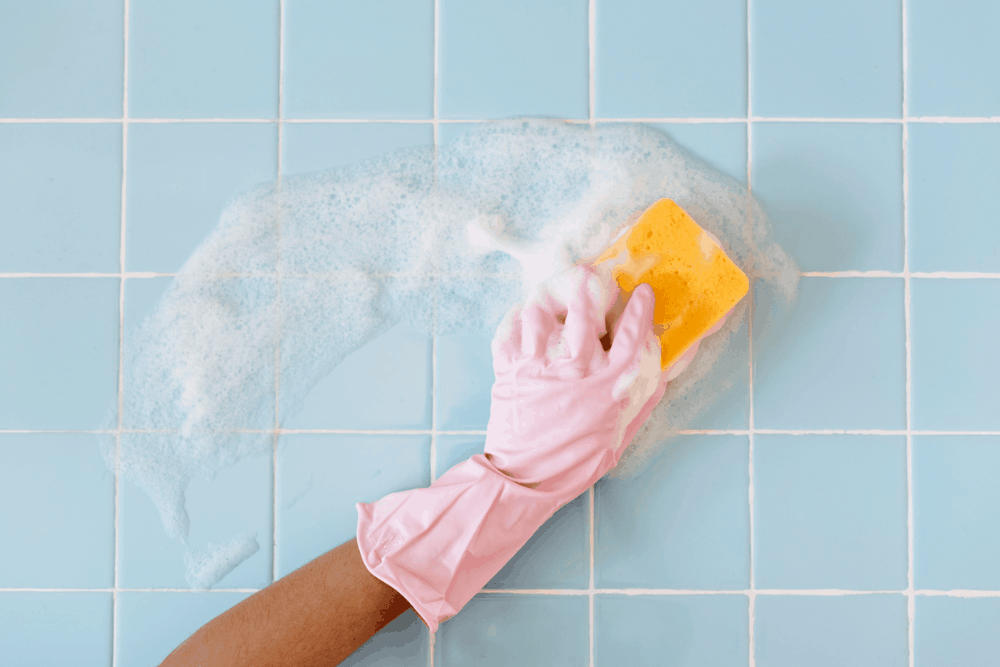
Maintenance is where fiberglass gains some ground — but tile, when cared for properly, offers a long-term payoff that more than compensates for the extra effort.
Maintaining a Tile Shower
Tile upkeep is straightforward when you stay consistent:
- Grout cleaning to prevent mold and mildew from taking hold
- Periodic resealing — applying a proper shower grout sealant protects joints and preserves the finish over time
- Wiping down surfaces after use to minimize mineral deposit buildup
Skipping these steps doesn’t ruin a tile shower overnight, but neglect compounds. Homeowners who stay on top of maintenance are consistently rewarded with a shower that looks just as good a decade in.
Maintaining a Fiberglass Shower
Fiberglass is genuinely easy to clean day-to-day — non-abrasive cleaners, a quick wipe-down, done. The downside is that surface scuffs and soap scum stains become progressively harder to remove as the material ages, and no amount of cleaning restores the finish once it starts to dull.
Acrylic vs Fiberglass Shower Base: What’s the Difference?
Choosing between shower materials often extends to the base itself. When evaluating prefab options, the acrylic vs fiberglass shower base comparison deserves its own look — independent of wall materials.
What Is an Acrylic Shower Base?
Acrylic bases are made from vacuum-formed acrylic sheet, typically reinforced with fiberglass or resin underneath. They feel warmer underfoot, are more resistant to staining, and are easier to repair if surface damage occurs. Acrylic also retains its color and sheen longer than fiberglass under regular use.
What Is a Fiberglass Shower Base?
Fiberglass bases are built from layers of glass fiber and polyester resin, making them lightweight and rigid. They’re one of the most common bases in budget bathroom builds due to their low cost and fast installation. However, they’re more susceptible to cracking under concentrated weight or pressure over time.
Which Shower Base Is More Durable?
When comparing the two directly on what matters most:
- Resistance: Acrylic handles impact better and resists cracking longer.
- Cost: Fiberglass is less expensive, though the gap is modest.
- Feel underfoot: Acrylic is noticeably warmer and softer — a small detail that becomes noticeable with daily use.
For most homeowners investing in a long-term remodel, acrylic edges out fiberglass as a base — though neither approaches the longevity of a properly tiled shower floor.
Pros and Cons of Tile Showers
Tile is the choice for homeowners who want their bathroom to feel considered and built to last.
Pros:
- Fully customizable in material, size, pattern, and color
- Adds real aesthetic value and boosts resale potential
- Long lifespan with proper installation and routine care
- Scales from understated to genuinely striking
Cons:
- Higher upfront cost and installation time
- Requires skilled labor — not a DIY-friendly project
- Ongoing grout cleaning and periodic sealing
For premium remodels, tile is difficult to compete with. The design flexibility alone justifies the investment for most homeowners who plan to stay long-term.
Pros and Cons of Fiberglass Showers
Fiberglass has earned its place in the market — for the right circumstances.
Pros:
- Lowest upfront cost of any shower option
- Fast installation with minimal disruption
- Simple, low-maintenance daily cleaning
Cons:
- Limited aesthetic options — what you see is what you get
- Surface degrades faster, especially with heavy use
- Lower long-term ROI compared to tile
It’s a practical, budget-conscious choice — best suited for rentals, secondary bathrooms, or situations where speed and cost are the primary constraints.
Final Verdict: Tile or Fiberglass Shower?

Neither option is universally better. Tile wins on design, longevity, and property value. Fiberglass wins on upfront cost and installation speed. The right answer depends entirely on your goals, timeline, and how long you plan to stay in your home.
Which Option Is Best for Your Bathroom Remodel
- Tighter budget or short-term project? Fiberglass is a reasonable, practical solution.
- Long-term investment or design-forward remodel? Tile is the clear choice — and the one most homeowners don’t regret.
When in doubt, talking to a professional before committing is always worth the time. A brief consultation can surface options you hadn’t considered and prevent costly mid-project decisions.
Professional Shower Installation Services in Sacramento
If you’re leaning toward tile — or simply want honest guidance before deciding — BAYTILE has been helping homeowners across the Sacramento region.
Their tile installation services cover everything from initial material consultation to final installation — with the kind of attention to detail that makes the difference between a shower that lasts five years and one that lasts thirty. Reach out to BAYTILE to talk through your project and get a clear, no-pressure path forward.