
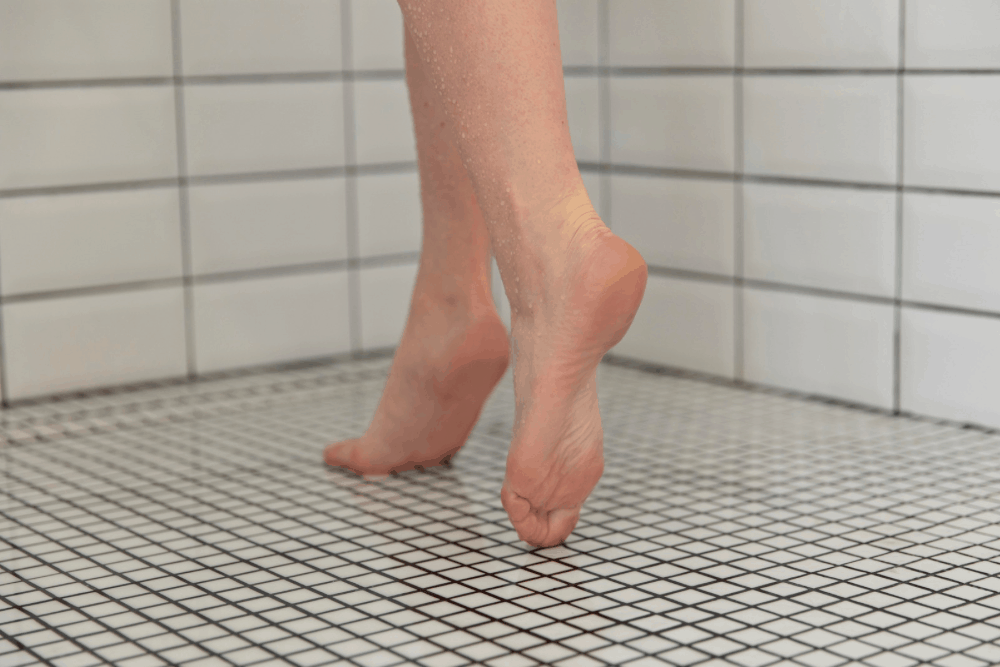
Slip resistant shower floor tile isn’t just a design preference — it’s one of the most practical decisions you’ll make in a bathroom renovation. Wet surfaces cause thousands of household injuries each year, and the shower floor is among the highest-risk spots in any home. The right tile reduces that risk significantly while offering a finish that holds up to daily use and looks the part. From material selection to surface texture, knowing what to prioritize before you buy makes a measurable difference. If you’re planning a bathroom renovation, exploring professional tile installation services is a strong first step toward getting it right.
What Is Slip Resistant Shower Tile?
Not every tile is built for wet conditions. Slip resistant shower tile refers to tiles engineered — or textured — to provide traction underfoot even when wet. The difference between a safe shower floor and a hazardous one often comes down to the tile surface and how it interacts with water.
How Slip Resistance Works
Slip resistance comes from surface texture and friction. Smoother tiles allow water to sit on the surface, reducing grip significantly. Textured tiles — whether through a matte finish, raised pattern, or natural surface variation — create friction that keeps feet stable even when water is flowing.
The technical measure behind this is the coefficient of friction (COF). For wet areas, tile rated at 0.60 COF or higher is generally recommended. In practical terms: the more texture a tile has, the more grip it provides.
Why It Matters in Wet Areas
The shower is one of the few places in a home where bare feet meet a constantly wet surface — every single day. That combination creates a consistent slip risk, particularly for children, older adults, or anyone with limited mobility. A tile choice that prioritizes traction isn’t overcautious — it’s one of the smartest decisions a homeowner can make for family safety.
Benefits of Slip Resistant Shower Tile
Beyond safety, slip resistant bathroom floor tiles bring a combination of functional and aesthetic value that smooth tiles simply can’t match in wet environments.
Better Safety for Daily Use
The most direct benefit is reduced accident risk. Textured tile grips the foot, providing stability during those moments when balance is most at risk — stepping in, stepping out, or moving on a soapy surface. For households with young children or elderly family members, this isn’t optional — it’s essential.
More Comfort and Confidence
Safety and comfort aren’t separate things. When the floor feels stable underfoot, the shower experience changes. There’s no hesitation when stepping in, no instinct to move carefully to avoid slipping. That sense of confidence is something you notice every morning, even if you never thought about it before installation.
Style Without Sacrificing Function
The idea that slip resistant tiles look industrial or dated is outdated. Today’s options include matte-finish porcelain, textured stone-look ceramics, and mosaic formats that are as visually refined as any glossy tile — without the safety trade-off. Slip resistance is now built into designs that suit modern, transitional, and classic bathrooms alike.
Best Types of Slip Resistant Shower Tile for Bathrooms
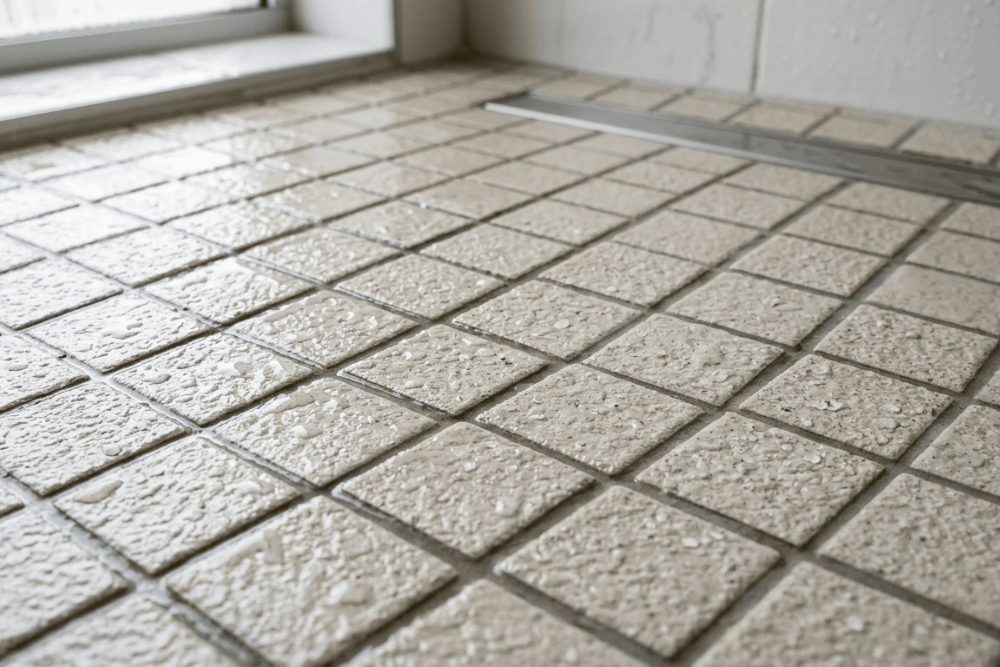
Material choice directly affects both traction and durability. When selecting slip resistant tiles for bathroom floors, consider how each material performs under constant moisture.
Porcelain Tile
Porcelain is one of the most reliable options for wet areas. Its dense composition and low water absorption rate make it naturally resistant to moisture, while textured or matte-finish porcelain provides the traction needed for shower floors. It’s a durable, low-maintenance option that performs well in both residential and commercial settings.
Mosaic Tile
Mosaic tiles — small-format pieces typically set in sheets — offer a structural advantage for shower floors: more tiles means more grout lines, and more grout lines mean more grip. The increased number of joints creates natural traction across the entire surface, making mosaic one of the most effective formats for slip resistance in wet zones.
Textured Ceramic Tile
Ceramic is a cost-effective alternative to porcelain that works well in lower-traffic bathroom applications. When choosing ceramic for a shower floor, surface texture is non-negotiable — unglazed or relief-pattern ceramic provides adequate grip, while standard glazed ceramic does not. It’s best suited for secondary bathrooms or lower-budget projects where porcelain isn’t feasible.
Natural Stone Options
Slate and travertine are popular natural stone choices that offer inherent texture and visual depth. Both provide reasonable traction, but natural stone requires regular sealing to prevent moisture absorption and staining. Without proper maintenance, it can deteriorate faster than engineered tile options. Worth considering for aesthetics, but factor in the upkeep commitment.
Common Mistakes to Avoid When Choosing Shower Floor Tile
A poor tile choice doesn’t just affect appearance — it creates safety risks and durability problems that are expensive to correct after installation.
Choosing Glossy Tile for Wet Areas
Glossy tiles look striking on walls, but on a shower floor, they become hazardous when wet. The smooth, reflective surface offers minimal friction, and water sitting on top reduces grip even further. Glossy tile belongs on walls, backsplashes, and dry floors — not shower pans.
Ignoring Grout Joint Traction
The tile itself isn’t the only source of grip — grout lines contribute meaningfully to traction. Larger-format tiles have fewer joints and therefore less grip across the surface. Smaller tiles and mosaic formats maximize the number of grout lines and increase overall safety underfoot. Grout selection and joint sizing are part of the safety equation, not just aesthetics.
Focusing Only on Looks
It’s easy to fall in love with a tile in a showroom under dry conditions. But how a tile performs when wet is a different question entirely. A tile that looks perfect on a display board may be dangerously smooth in a real shower. Always check the COF rating and, when possible, test the surface texture before committing.
We Install Safe and Stylish Tile for Showers and Bathroom Floors
Choosing the right tile is only part of the equation — proper installation is what makes it perform as intended. An uneven substrate, incorrect adhesive, or poorly finished grout lines can undermine even the best tile selection.
BayTile’s team of certified professionals has over 15 years of experience delivering precise, reliable shower tile installation across the Sacramento region — including Roseville, Folsom, El Dorado Hills, Granite Bay, Rocklin, and surrounding areas. Founded by Walter Argueta, the team understands that safety starts with correct installation: level surfaces, proper substrate preparation, and grout work that contributes to both durability and traction.
If you’re planning a bathroom renovation, consulting with experienced installers before selecting your tile ensures the final result is as safe as it is well-designed.
Is Slip Resistant Shower Tile Hard to Clean?
This is one of the most common concerns — and the answer is more nuanced than a simple yes or no. Textured surfaces do require more attention than smooth ones, but “harder to clean” is often an overstatement. The real difference is in the method, not the effort.
Smooth tiles can be wiped quickly but allow soap scum and mineral deposits to spread evenly across the surface. Textured tiles may trap residue in the surface variation, but a brush with firm bristles and the right cleaner addresses this easily. With a consistent routine, textured shower tile stays clean without significantly more work than its smooth counterpart.
How to Maintain Slip Resistant Bathroom Floor Tiles
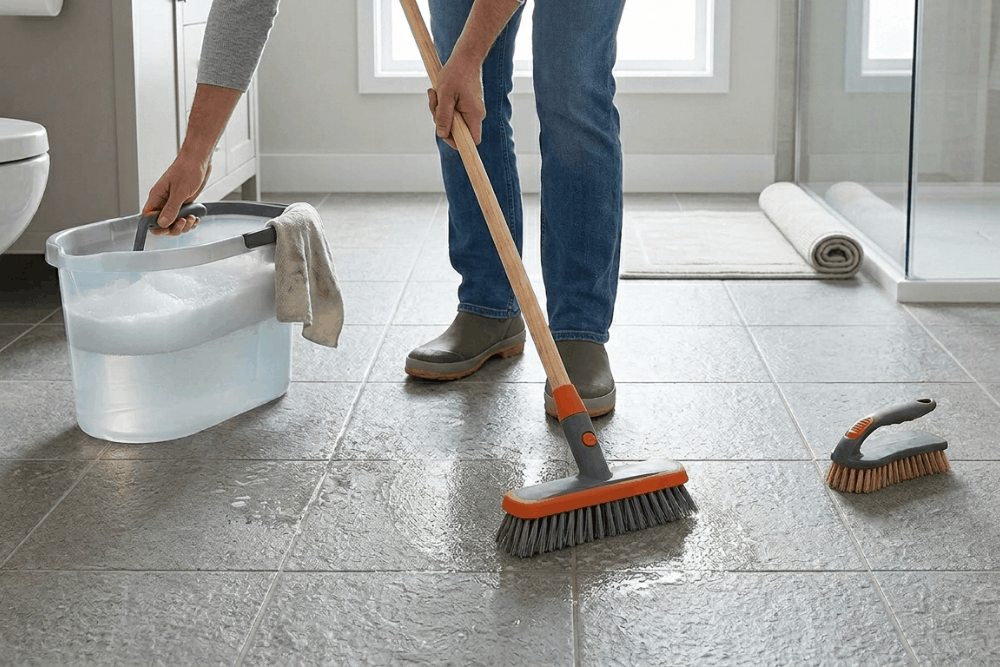
A well-maintained tile surface holds its traction and appearance for years. Prevention is simpler — and less expensive — than repair.
Cleaning Tips for Textured Surfaces
- Sweep or rinse the floor regularly to prevent soap and mineral buildup in surface texture
- Use a pH-neutral cleaner appropriate for the tile material — acidic or abrasive products damage grout and degrade tile finishes over time
- Scrub with a stiff-bristle brush rather than a flat mop to reach textured areas effectively
Sealing and Protection
Natural stone tiles require periodic sealing to block moisture absorption — typically once or twice a year depending on use. Porcelain and ceramic are less demanding but benefit from grout sealing to prevent staining and deterioration. Sealing extends the useful life of the installation and keeps the surface performing as intended. For comprehensive guidance on this, professional tile flooring installation teams can advise on the right sealing schedule for your specific materials.
Regular Inspection
Set aside a few minutes periodically to check for cracked tiles, deteriorating grout, or areas where texture has worn down from heavy use. Catching these early prevents water from reaching the substrate below and avoids larger repairs down the line. Small issues are always easier — and less expensive — to fix when addressed promptly.
The right slip resistant shower floor tile is an investment in safety, comfort, and long-term durability. Whether you’re starting from scratch or updating an existing bathroom, the combination of the right material, correct format, and professional installation makes all the difference. When in doubt, consult with someone who installs tile daily — it’s the fastest way to avoid costly mistakes.