
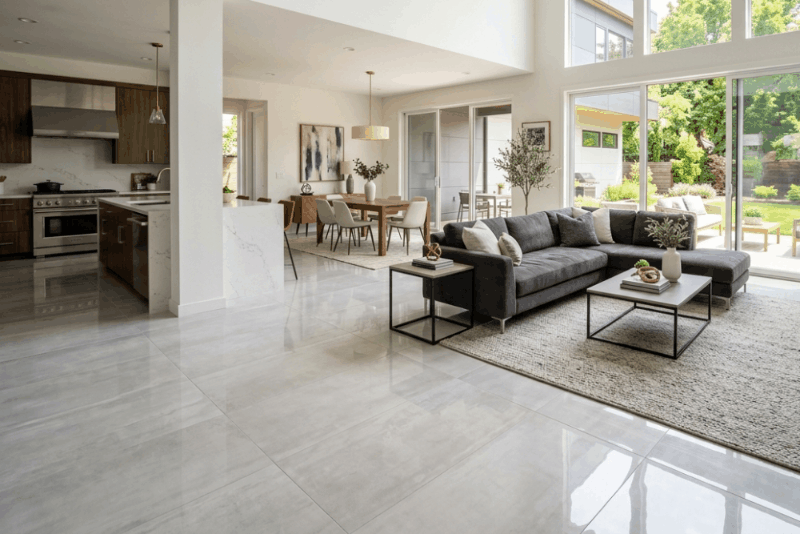
Do tile floors increase home value? The short answer is yes — particularly when the right material is chosen and installed correctly. Tile flooring consistently ranks among the most durable and buyer-friendly options on the market, offering a combination of longevity, low maintenance, and visual appeal that resonates with buyers across price points. Whether you’re preparing to list or simply investing in your home for the long term, understanding how flooring choices affect perceived value is worth the time. A good starting point is exploring professional tile flooring installation to understand what the process entails and what results to expect.
How Tile Flooring Affects Your Home’s Resale Value
First impressions in real estate are formed within seconds — and flooring plays a central role in that initial read. A home with clean, well-installed tile signals care, durability, and move-in readiness to a prospective buyer. Worn carpet or damaged vinyl, by contrast, immediately raises questions about what else in the home might need attention.
Beyond aesthetics, buyers factor in long-term maintenance costs. Tile floors require minimal upkeep compared to hardwood or carpet, and that practicality translates into perceived value — especially for buyers who want a home that doesn’t demand immediate renovation work.
Does Porcelain Tile Increase Home Value?
Does porcelain tile increase home value? Consistently, yes. Porcelain is often perceived as a premium flooring material, and for good reason. Its dense composition, near-zero water absorption, and scratch resistance make it one of the most durable options available. It holds up in high-traffic areas, resists staining, and requires very little maintenance over its lifespan.
From a buyer’s perspective, porcelain tile in a kitchen or bathroom signals a property that has been finished with lasting materials. Modern large-format porcelain in particular — with minimal grout lines and a clean, architectural look — tends to read as a contemporary upgrade that justifies a higher asking price.
Does Ceramic Tile Increase Home Value?
Does ceramic tile increase home value? Yes, though the impact depends on context. Ceramic is less dense than porcelain and slightly more vulnerable to moisture and heavy wear, which affects how buyers in certain price brackets perceive it. That said, in the right application — a secondary bathroom, a laundry room, or a utility space — ceramic tile is a cost-effective investment that still elevates the finish level above carpet or basic vinyl.
The key distinction is placement. Ceramic tile used thoughtfully in appropriate areas delivers solid returns relative to its cost, making it a practical choice for homeowners working with a tighter renovation budget.
Tile vs. Other Flooring: Which Adds More Value?
Tile isn’t the only option that affects resale value, but it holds its own against alternatives in several important ways:
| Flooring Type | Durability | ROI Potential | Maintenance | Buyer Preference |
| Tile | Very high | Strong | Low | High in kitchens/baths |
| Hardwood | High | Very strong | Moderate | High in living areas |
| Vinyl (LVP) | Moderate–high | Moderate | Low | Growing, budget-friendly |
| Laminate | Moderate | Low–moderate | Low | Declining |
Hardwood remains the benchmark in living spaces, but tile consistently outperforms it in wet or high-traffic areas where wood is impractical. For kitchens, bathrooms, and entryways, tile is often the stronger investment.
Best Tile Types to Maximize Your ROI
Not all tile generates the same return. Buyers respond differently to materials and formats, and some options simply age better than others visually and functionally.
Porcelain remains the safest and most broadly appreciated choice — especially large-format slabs in neutral tones that read as timeless rather than trendy. Large-format tile in general creates a sense of space and continuity that photographs well and impresses in person.
Natural stone — marble, travertine, slate — carries a premium perception that can meaningfully raise a home’s appeal in higher price-point markets. The trade-off is maintenance: stone requires sealing and careful upkeep, which some buyers factor into their offer.
Wood-look tile has become one of the strongest-performing options in recent years. It delivers the warmth and visual familiarity of hardwood with the durability and moisture resistance of tile — a combination that resonates with a broad pool of buyers. Thinking through the right tile type for each space matters, particularly in the kitchen; choosing the right tiles for kitchen floors can meaningfully shape how buyers perceive the most-used room in the home.
Where to Install Tile for the Biggest Impact
Location determines return. The same tile installed in different areas of a home will have different effects on buyer perception and resale value.
Kitchen — The highest-impact space in most homes. Tile floors here signal durability and ease of cleaning, two things buyers prioritize heavily in kitchens.
Bathrooms — Tile is expected here, and its absence is often a red flag. A well-tiled primary bathroom is one of the most reliable value drivers in any home.
Entryway — First impressions start at the door. A tiled entryway sets the tone for the rest of the home and communicates that it’s been maintained with care.
Balcony / Patio — Outdoor living spaces are increasingly valued by buyers, and a well-finished outdoor floor makes a real difference. The right tiles for balcony floor installation communicates that even secondary spaces have been considered and finished properly.
How to Choose the Right Tile Before Listing Your Home

Tile selection for resale is a different exercise than tile selection for personal taste. Choices that feel personal and expressive to the current owner can narrow the pool of interested buyers significantly.
Neutral colors — whites, warm grays, beiges, and soft greiges — photograph better, appeal to more buyers, and are less likely to require replacement by a new owner. Bold patterns and highly specific color palettes can actively reduce perceived value.
Durable materials are non-negotiable. Buyers conducting due diligence will notice the difference between a floor that looks new and one that’s beginning to show wear. Investing in materials that maintain their appearance over time protects the return.
Avoid overly personalized designs. A handcrafted mosaic feature floor may be a conversation piece, but it’s also something a buyer may want to remove — and that cost factors into their offer.
Installation quality matters as much as the tile itself. Uneven surfaces, inconsistent grout lines, or visible lippage signal poor workmanship and undercut even the most attractive material. Buyers notice, and so do their inspectors. Partnering with professionals for tile flooring installation ensures the finished result reflects the value you’re trying to communicate.
Final Verdict: Is Tile Flooring Worth the Investment?
For most homeowners, yes — tile flooring is a sound investment, particularly when placed strategically and installed with care. The return depends on material choice, location, and execution, but tile consistently outperforms most alternatives in the spaces where buyers scrutinize most.
Porcelain and large-format tile offer the strongest combination of durability and visual impact. Natural stone elevates perception in premium markets. Wood-look tile bridges the gap between warmth and practicality. In all cases, professional installation is what converts a good tile choice into a genuine value driver.
BayTile has helped homeowners across Sacramento, Roseville, Folsom, El Dorado Hills, Granite Bay, Rocklin, and the greater Sacramento Valley maximize their home’s appeal through precise, professional tile work. Whether you’re preparing to list or planning a longer-term renovation, our team can evaluate your space and recommend an approach that balances aesthetics, budget, and resale impact. Explore tile installation services to get started with a consultation.