

Basements throw a different set of problems at flooring than any other room in the house. This guide compares the materials that actually hold up down there, and walks through what the floor needs before any tile goes down.
Finding the best tile for basement floor projects means thinking beyond looks, since basements deal with moisture, temperature swings, and heavier daily use than most other rooms in the house. Not every material handles those conditions well, which is why picking the right one from the start matters more here than almost anywhere else. Ahead, we’ll compare the strongest best basement tile picks, walk through prepping the floor itself, and cover the full set of basement floor tile options so you can match a material to how you actually plan to use the space. If you’re already leaning toward a full tile flooring installation, this comparison is a good place to start.
What Makes a Tile Suitable for a Basement Floor?
Not every tile that works upstairs performs the same way below grade. Basements bring their own set of conditions, and the right material depends on how the space handles moisture, weight, temperature, and everyday wear. The factors below are worth weighing before settling on a specific product.
Moisture Resistance
Moisture is the single biggest factor to plan around in a basement, since it sits below ground level and stays more exposed to it than any other floor in the house. Minor leaks, seasonal condensation, and gradual water absorption through concrete can all affect a floor over time, and materials that hold onto moisture are more prone to mold underneath. Some tile options handle this far better than others, which we’ll get into shortly.
Durability and Load Capacity
A basement often does double duty as a storage area, a home gym, or an entertainment room, all of which put real weight and impact on the floor. Frequent foot traffic combined with heavier equipment means the tile needs to hold up to more than casual daily use.
Comfort and Temperature
Basement floors tend to feel noticeably colder underfoot than floors elsewhere in the home, largely because they sit directly on or near the concrete slab. Some materials handle that better than others, and pairing certain tile types with radiant heating can make a real difference for anyone planning to walk around barefoot.
Maintenance Requirements
How much upkeep a floor needs matters more in a basement, where spills and moisture are already part of the equation. Ease of cleaning, whether the material needs periodic sealing, and how well it resists stains all factor into which option makes sense long term.
Best Basement Tile Options
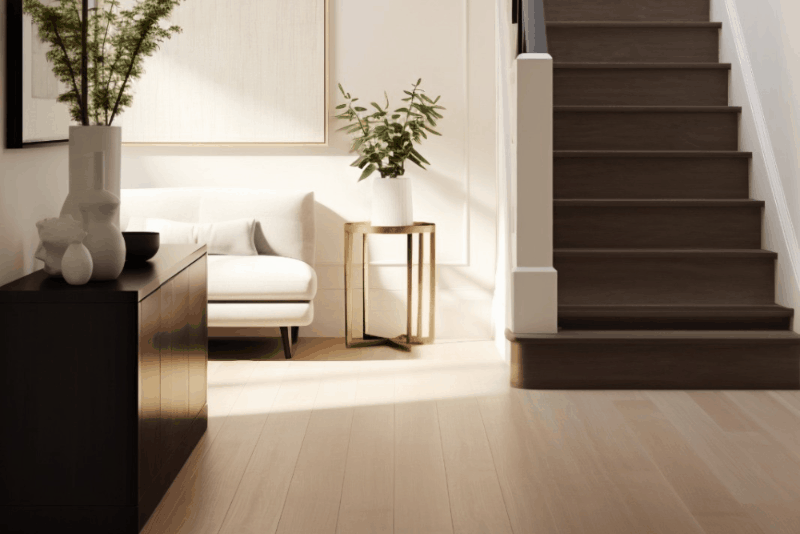
Each material below brings its own strengths depending on how much moisture the space sees, what the budget looks like, and how the room gets used day to day. Here’s how the main best basement tile and basement floor tile options compare against each other.
Porcelain Tile
Porcelain is often considered one of the strongest picks for a basement, largely because of how little water it absorbs. It holds up well under regular wear, comes in a considerable number of design styles, and tends to last for decades with minimal upkeep. For basements where moisture is a real concern, it’s typically the safer, more premium choice.
Ceramic Tile
Ceramic offers a lot of the same visual appeal as porcelain at a friendlier price point, and it’s generally easier to install. Its main drawback shows up in consistently damp basements, where its higher water absorption makes it less suited than porcelain for areas prone to standing moisture.
Vinyl Tile
Vinyl has become a popular pick for basements thanks to its water resistance and a noticeably warmer feel underfoot compared to porcelain or ceramic. It’s also simple to replace individual pieces if damage happens down the road. Worth noting: vinyl isn’t a traditional ceramic product, so it behaves differently during both installation and everyday use.
Natural Stone Tile
Natural stone brings a look that’s hard to replicate with manufactured tile, but it comes with more upkeep. Most stone requires regular sealing to resist moisture and staining, which makes it a better fit for basement projects aiming for a more upscale finish than for purely practical, low-maintenance spaces.
Rubber Tile
Rubber tends to show up in basements built around function rather than appearance, like home gyms or kids’ play areas. Its main strength is impact absorption, which makes it a practical pick for equipment or activity-heavy spaces, even though it’s not typically chosen for its looks.
How to Prepare a Basement Floor for Tile
Even the strongest tile choice can fail if the concrete underneath isn’t properly prepared first. Getting the base right matters just as much as picking the material itself.
Test the Concrete for Moisture
A simple plastic sheet test, taping a square of plastic to the floor for 24 hours and checking for condensation underneath, can flag obvious moisture issues. A moisture meter offers a more precise reading, and if levels come back consistently high, it’s worth having a professional assess the slab before moving forward.
Repair Cracks and Uneven Areas
Cracks and dips in the concrete should get addressed before any tile goes down, typically with a self-leveling compound that creates a stable, even surface. Skipping this step often leads to tile that cracks or shifts once weight is applied unevenly across the floor.
Install a Waterproofing or Uncoupling Membrane
These membranes sit between the concrete and the tile, helping absorb minor movement in the slab while blocking moisture from reaching the tile above. Beyond preventing cracks, they add real durability to the finished installation, especially in a space as prone to moisture as a basement.
Common Mistakes When Choosing Basement Floor Tile
Plenty of basement flooring problems trace back to a handful of avoidable decisions made early in the project.
- Ignoring moisture entirely – skipping a moisture test can mean discovering a problem only after tile is already installed.
- Choosing overly porous materials – tile that absorbs water easily is more likely to develop mold or staining issues over time.
- Not leveling the concrete first – tile installed over an uneven slab is far more likely to crack under normal use.
- Prioritizing looks over function – a striking tile that can’t handle moisture or heavy traffic often doesn’t hold up in a basement setting.
- Skipping waterproof membranes – leaving out this layer removes a meaningful buffer against future cracking and moisture damage.
Professional Basement Tile Installation Services
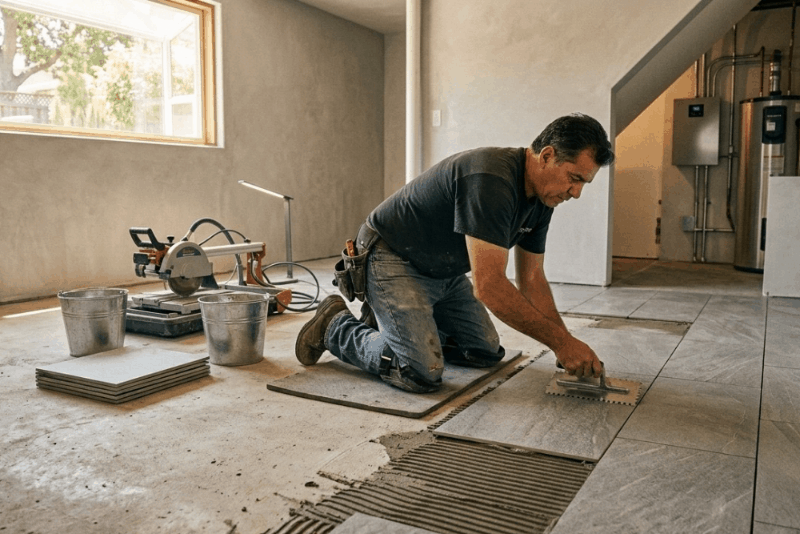
Basement projects call for more than picking a tile off the shelf. Moisture levels, subfloor condition, and proper prep work all need a trained eye before installation even begins.
That’s where working with an experienced team pays off. Our tile installation services cover everything from moisture testing to membrane installation and the tile flooring installation itself, which helps head off the cracking, moisture intrusion, and tile lifting that tend to show up when steps get skipped. Homeowners across Roseville, Sacramento, El Dorado Hills, Folsom, Granite Bay, and Rocklin planning a basement remodel often find it worth having the space evaluated before committing to a specific material, since the right prep work now can prevent a lot of headaches later.
Frequently Asked Questions About Basement Floor Tiles
Here are some of the most common questions homeowners ask before choosing a basement floor.
What Is the Best Tile for a Damp Basement?
Porcelain is generally the strongest choice for a damp basement, thanks to its low water absorption and durable surface. It resists moisture better than ceramic and requires far less upkeep than natural stone, making it a dependable option where humidity is a consistent concern.
Are Carpet Tiles Good for Basement Floors?
The best carpet tiles for basement spaces can work well for comfort and warmth, particularly in finished living areas. That said, they’re more vulnerable to moisture damage than porcelain or vinyl, so they’re a better fit for basements with a confirmed, consistently dry slab.
Can You Install Tile Directly Over Concrete?
Yes, as long as the concrete is clean, level, and free of active moisture issues. A moisture test and any needed crack repairs should happen first, and a waterproofing or uncoupling membrane is often recommended for added protection before tile goes down.
What Is the Most Affordable Basement Tile Option?
Ceramic tile is typically the most budget-friendly choice, offering a similar look to porcelain at a lower cost. Vinyl tile is another economical option, particularly for basements where comfort underfoot matters as much as staying within budget.