

Subway tile patterns can completely transform how the same rectangular piece reads on a wall. A classic layout feels timeless and understated, while a more graphic arrangement can turn a plain surface into the focal point of the room. In this guide, we’ll walk through traditional and decorative subway tile layout patterns, along with the factors — room size, tile proportion, grout color, and desired visual effect — that shape which option fits best. There’s no single “correct” pattern here, only the one that suits your space, and for homeowners planning a full remodel, professional tile flooring installation makes sure whichever design you choose is executed cleanly.
What Is Subway Tile?
Subway tile is a rectangular ceramic or porcelain piece, traditionally sized around 3×6 inches with a 1:2 length-to-width ratio, though longer and more elongated formats are increasingly common. Its clean, uniform shape pairs easily with countertops, cabinetry, and fixtures, which is why it shows up so often in kitchens and bathrooms. The classic glossy white version is still a familiar choice, but today’s subway tile also comes in matte finishes, stone-look porcelain, and colors from soft neutrals to deep, saturated tones. The layout — not just the tile itself — is what shapes the final look.
Popular Subway Tile Layout Patterns
The same subway tile can look completely different depending on the subway tile layout you choose. Here’s a quick look at six subway tile layout patterns, from traditional to more decorative, and where each tends to work best.
Classic Running Bond (Brick) Layout
Each row shifts by half a tile, so the vertical joints stagger like a brick wall. It’s the most familiar subway tile arrangement — balanced, versatile, and easy to read in almost any space. This pattern works especially well on backsplashes and larger walls. A contrasting grout makes the joints part of the design; a matching grout lets the tile itself take center stage.
Stacked Grid Layout
A stacked layout lines tiles up in straight horizontal and vertical rows instead of staggering the joints. The result is a clean, geometric look suited to contemporary spaces. Because the grid lines run continuously, this pattern can emphasize a room’s architecture — drawing the eye along a wall or up toward the ceiling.
Herringbone Subway Tile
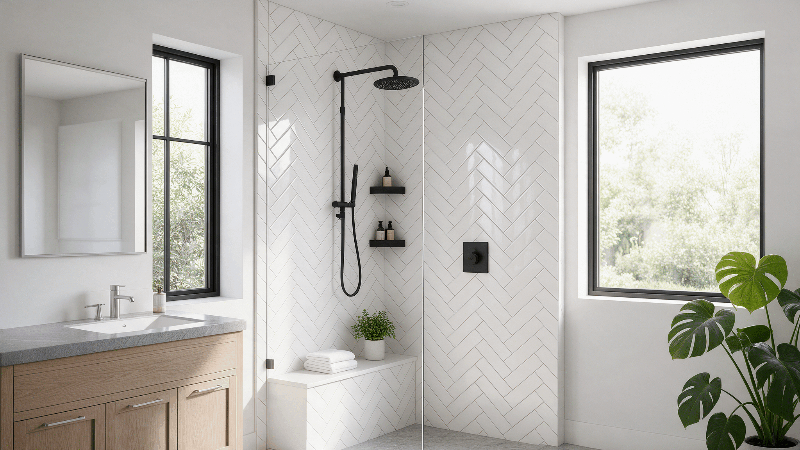
Herringbone subway tile is set at an angle, with each piece meeting the next at roughly 90 degrees to form a zigzag. It adds real movement to a wall and can turn a simple surface into a focal point on its own. Because the cuts and angles require careful planning, herringbone typically calls for more precise installation than a straight layout.
Subway Herringbone Tile (Vertical Version)
Subway herringbone tile can also run in a vertical orientation, shifting the visual emphasis upward instead of across the wall. This version tends to make a space feel taller, making it a strong option for narrow walls or areas where you want to draw the eye up. The zigzag effect is similar to traditional herringbone, just rotated.
Chevron Layout
Chevron looks related to herringbone at a glance, but the tiles are angle-cut so their ends meet in a continuous, unbroken V, rather than interlocking at square edges. That seamless point makes chevron feel more graphic and directional — better suited as a standalone decorative element than an all-over surface treatment.
Basketweave Layout
Basketweave groups tiles in alternating pairs — one set horizontal, one vertical — to mimic woven fabric. It’s a more traditional, decorative pattern that adds texture to a wall without relying only on color for visual interest.
How to Choose the Right Subway Tile Layout
The best layout depends on the space it’s going into, not just personal taste. Three factors matter most.
Room Size and Shape
A pattern that feels dynamic on a large wall can feel busy in a small one. Narrow spaces often benefit from layouts with less visual movement, like running bond or stacked grids, while larger surfaces can handle a more graphic pattern like herringbone or chevron.
Tile Size and Proportions
Keeping tile size proportional to the room helps a pattern read correctly. Smaller-format tiles create more joints and a busier look, while larger pieces simplify it. Proportions also affect how complex a pattern like herringbone or basketweave will appear once installed.
Grout Color and Spacing
Grout color changes how a pattern reads. A contrasting grout makes every joint visible and emphasizes the layout itself, while a grout close to the tile color lets the pattern fade into a subtler texture. Whichever you choose, keeping joint width consistent is what makes the finished wall look intentional.
Best Rooms for Different Subway Tile Layout Patterns
The same pattern can produce a different result depending on where it’s installed.
Kitchen Backsplashes
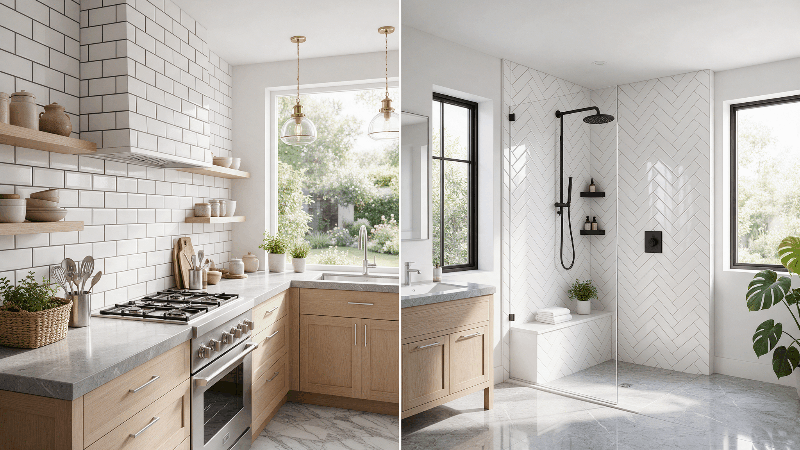
Behind countertops and prep areas, running bond and stacked layouts offer a clean, easy-to-maintain backdrop, while herringbone can add character without disrupting the rest of the kitchen’s design. Functionality and coordination with cabinetry usually come first here.
Bathroom Walls and Showers
In bathrooms and showers, moisture, maintenance, and overall scale are worth weighing carefully. Not every layout suits a wet, tightly enclosed space equally well, so consider how much detail — and how many cuts — a pattern will require in that setting.
Accent Walls
A more graphic layout like chevron, herringbone, or basketweave can work well as an accent wall, giving a single surface visual weight without covering the entire room — a natural fit for contemporary design.
Common Mistakes When Installing Subway Tile Patterns
Even a well-chosen pattern can fall short if a few common issues go unaddressed:
- Skipping a dry layout — test the pattern before setting tile to avoid awkward cuts later.
- Ignoring end and corner cuts — plan where partial tiles land before the first row goes up.
- Uneven grout joints — use spacers and check spacing as you go.
- No defined starting point — begin from a focal wall or center line to keep the pattern balanced.
- Mismatched scale — match tile size and pattern complexity to the room.
Professional Tile Installation Services
Some subway tile layout patterns — herringbone and chevron especially — leave little room for error once cutting begins, which is why precise installation matters as much as the design itself. BAYTILE has spent more than 15 years installing tile and stone professionally, led by founder Walter Argueta, and our team can help plan and execute the layout that fits your space, whether that’s a straightforward running bond or a detailed herringbone wall. We work with homeowners throughout Sacramento, Roseville, Folsom, and Rocklin, bringing the same attention to detail to kitchens, bathrooms, and accent walls alike. If you’re planning a project, our tile installation services team is ready to talk through the details and put together a quote.