
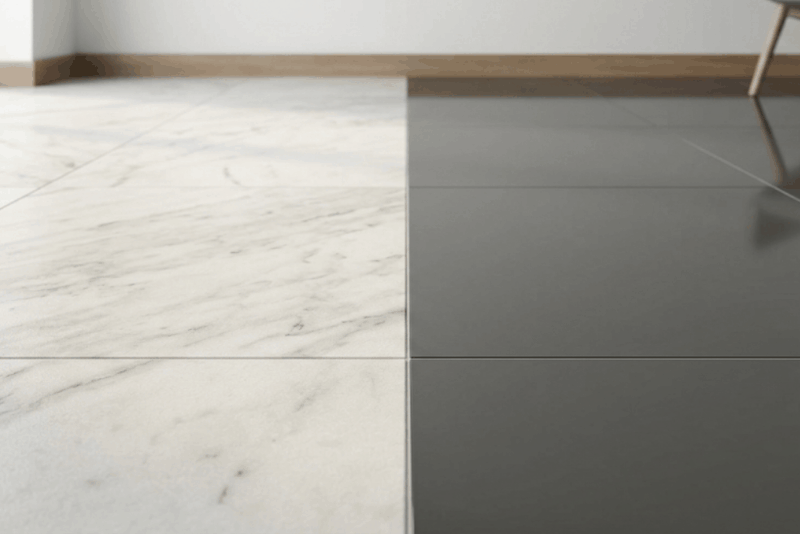
When weighing marble vs porcelain tile, most homeowners start with aesthetics — and that’s a reasonable starting point. Both materials can produce stunning results in the right setting. But the differences between them go well beyond appearance: maintenance requirements, water resistance, long-term durability, and installation complexity all vary significantly between the two. Understanding those differences before committing to either material is what separates a renovation that holds up from one that requires costly corrections within a few years. This guide covers everything you need to evaluate both options — from how they compare as floor tile to how each performs in a shower environment — so the final decision is grounded in the specifics of your project, not just first impressions.
Marble Versus Porcelain Tile: A Complete Comparison
The decision between marble versus porcelain tile is rarely as simple as picking the more attractive option. Each material has a different set of strengths, and the right choice depends on where the tile will be installed, how much traffic or moisture it will be exposed to, and how much ongoing maintenance the homeowner is willing to commit to.
Before getting into specific applications, here’s how the two materials compare across the key criteria:
| Criteria | Marble | Porcelain |
| Appearance | Natural veining, unique per piece | Consistent; marble-look options available |
| Durability | Moderate; susceptible to scratching | Very high; resistant to wear and impact |
| Maintenance | High; requires regular sealing | Low; minimal upkeep required |
| Water resistance | Low to moderate (porous) | Very high (near-zero absorption) |
| Design versatility | Limited to natural variation | Broad; can mimic many materials |
| Long-term performance | Depends heavily on maintenance | Consistent across years of use |
Neither material wins across every category. What this comparison makes clear is that the decision should be driven by the demands of the space — not by a general preference for one material over the other.
The Natural Elegance of Authentic Marble
What makes marble genuinely irreplaceable is something that can’t be manufactured: each slab is unique. The veining, color variation, and surface movement in natural marble are formed over thousands of years, and no two pieces are identical. That authenticity gives marble a visual depth and character that porcelain — no matter how convincingly printed — cannot fully replicate.
In spaces where that sense of organic luxury is the design priority, marble delivers in a way that no engineered material can match. A marble floor in an entry hall or a marble-clad bathroom wall carries a presence that reads as genuinely premium because it is.
The trade-off is that this beauty requires stewardship. Marble is a porous stone, which means it absorbs liquids and is susceptible to staining if spills aren’t addressed promptly. It also requires periodic sealing to maintain its resistance to moisture and surface damage. The veining and natural variation that make marble visually distinctive also mean that achieving a consistent pattern across a large surface requires careful material selection and skilled installation.
The value of marble lies in its authenticity — but that authenticity comes with real maintenance expectations that need to be factored into the decision from the start.
The Low-Maintenance Appeal of Porcelain
Porcelain tile earns its place in the comparison not by competing with marble aesthetically — but by outperforming it in nearly every practical category. Its extremely low water absorption rate, resistance to scratching and staining, and minimal maintenance requirements make it one of the most reliable tile materials available for residential use.
Modern porcelain production technology has also closed the visual gap considerably. Today’s large-format porcelain tiles — particularly those designed to replicate marble, stone, or wood — are visually convincing in ways that earlier versions were not. For homeowners who want the look of natural stone without the upkeep commitment, marble-look porcelain offers a compelling middle ground.
Compared to marble, porcelain is easier to clean, doesn’t require periodic sealing in most applications, and holds its appearance more consistently over time without specialized care. That said, “low maintenance” doesn’t mean maintenance-free — grout lines still require attention, and the installation substrate still needs to be properly prepared for the tile to perform as intended.
Marble vs Porcelain Floor Tile: Which Lasts Longer?
When comparing marble vs porcelain floor tile, the performance dynamics shift in important ways. On a floor, the material faces constant mechanical stress — foot traffic, furniture legs, dropped objects, and cleaning cycles — and that changes which properties matter most.
Porcelain tile is significantly more resistant to surface wear and scratching than marble on horizontal surfaces. Its density means that the finish holds up under repeated foot traffic without the gradual dulling that polished marble experiences over time in high-use areas. Staining is also less of a concern with porcelain — its near-zero absorption rate means most spills can be wiped away without penetrating the surface.
Marble, by contrast, is more vulnerable in high-traffic flooring applications. It scratches more readily, absorbs moisture and staining agents when unsealed, and requires polishing to restore its finish after wear. In lower-traffic spaces — a formal sitting room, a primary bedroom, or a statement entry that sees limited daily use — marble can perform beautifully for decades with proper care. In kitchens, family bathrooms, or commercial-adjacent spaces, the maintenance demands increase substantially.
One important distinction worth making: the longevity of any tile floor depends not just on the material, but on the quality of the installation. A well-installed porcelain floor on a properly prepared, level substrate will consistently outlast the same tile installed over a compromised or uneven surface — regardless of the material’s inherent durability. Proper tile flooring installation is what allows any material to achieve its full performance potential.
Marble vs Porcelain Tile in Shower Environments
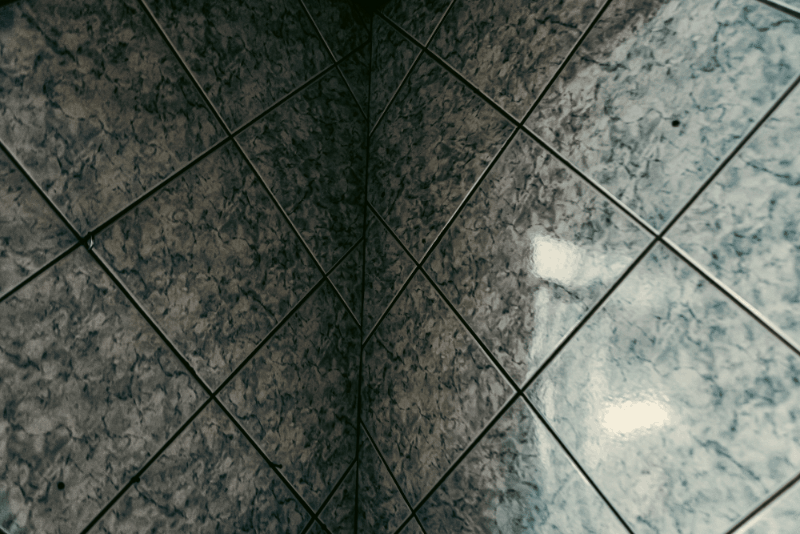
The shower is where the difference between these two materials becomes most consequential. When evaluating marble vs porcelain tile in shower applications, the constant exposure to water, steam, and cleaning products places specific demands on the material that are more intense than almost any other residential application.
Porcelain’s near-zero water absorption is a direct advantage in shower environments. It doesn’t absorb moisture, resists the growth of mold and mildew on the tile surface, and cleans easily with standard bathroom cleaners. For homeowners who want a shower that performs reliably with minimal specialized maintenance, porcelain is the more practical choice — particularly in showers that see daily use.
Marble in a shower is achievable — and beautiful when executed correctly — but it comes with a meaningfully higher maintenance commitment. Natural marble is porous, which means it requires consistent sealing to prevent water infiltration, staining from shampoos and soaps, and the gradual etching that acidic cleaning products can cause. Without that maintenance routine, marble in a shower will show wear and discoloration relatively quickly.
That said, there are contexts where marble makes sense in a shower even knowing the maintenance requirements: a master suite where the shower sees moderate, careful use; a design direction where the authentic veining of natural stone is the centerpiece of the space; or a renovation where the budget for both premium materials and ongoing care is available.
One point that applies to both materials equally: the performance of any shower tile depends heavily on factors beyond the tile itself. Waterproofing membrane quality, substrate preparation, grout selection, and installation precision all play critical roles in whether a shower holds up over time — regardless of which material covers the surface.
Trust the Experts for Your High-End Tile Installation
Choosing between marble and porcelain is the design decision. Ensuring that decision performs as intended is a question of installation precision. Both materials — and particularly marble — are sensitive to errors in substrate preparation, leveling, and adhesive application. The visual quality of either material is only fully realized when the installation underneath it is executed correctly.
This matters especially with large-format tiles, complex patterns, or custom layouts, where even minor miscalculations compound across the surface. Precise cuts, uniform joints, proper adhesive coverage, and correctly prepared substrates are what distinguish a professionally installed tile surface from one that develops problems within a few years.
BayTile has over 15 years of experience installing tile and natural stone in residential projects across Sacramento and the surrounding region, including Roseville and neighboring communities in the Sacramento Valley. Founded by Walter Argueta, the team brings technical expertise and a commitment to precise execution to every project — from straightforward porcelain floors to complex marble installations that require careful material handling and skilled layout work.
For homeowners weighing marble versus porcelain, a professional consultation before material selection can clarify which option suits the space, the budget, and the long-term lifestyle. Explore tile installation services to get started with an assessment and move forward with confidence.
Frequently Asked Questions
Cost and maintenance are the two areas where marble and porcelain generate the most questions — and where assumptions are most likely to lead homeowners in the wrong direction. Here are direct answers to the most common ones.
Is Porcelain Cheaper to Install Than Marble?
Generally, yes — but the gap depends on the project. Porcelain material costs are typically lower than marble, and installation is often less labor-intensive because porcelain is more consistent in thickness and easier to cut. Marble installation requires greater care, particularly for veining alignment and cutting around complex edges. Project scope, tile format, layout complexity, and surface preparation requirements all affect the final cost for either material.
How Often Does Marble Tile Need to Be Sealed?
There’s no universal answer — it depends on the marble type, its location, and the level of use the surface receives. Most natural marble benefits from periodic sealing, typically ranging from once a year to every few years. Shower applications and high-use floors generally require more frequent attention than wall installations or low-traffic spaces. The best approach is to follow the manufacturer’s recommendations for the specific marble and consult a professional installer to determine the appropriate sealing schedule for the project’s conditions.